Sea Animals in English for Kids
A Speech About Sea Animals in English for Kids: Words and Activities works with 12 words, practical sentence frames, and a beginning, middle, and end. Your child need not memorise a long text. They can name an animal, describe its body or movement, and add a fact. Pictures, gestures, sorting games, and short speaking rounds support recall. The goal is direct communication: “This is an octopus. It has eight arms. It lives in the sea.” Older children can add comparisons, reasons, and a conclusion.
Core Words and Phrases
Begin with animals your child recognises in pictures. Teach six words, then expand the set after quick recall. Pair each noun with a verb or feature, so your child learns working language instead of isolated labels.
Add the frames “It is…,” “It has…,” “It can…,” “It eats…,” and “It lives….” Eight nouns and five frames let a child build varied sentences. In multilingual families, confirm meaning in a home language, then return to the English word and sentence.
Putting the Words into a Short Speech
When preparing A Speech About Sea Animals in English for Kids: Words and Activities, give the child a speaking map instead of a script. The opening names the subject, the middle describes two or three animals, and the ending names a favourite with a reason.
A beginner model might be: “Today I will talk about sea animals. A dolphin can swim and jump. An octopus has eight arms. My favourite sea animal is the sea turtle because it has a beautiful shell. Thank you for listening.” Repeated sentence patterns reduce memory demands while producing a complete speech.
An older child can add links and comparisons: “Both sharks and dolphins have fins, but they are different kinds of animals. A dolphin is a mammal and must breathe air. I chose the octopus as my final example because its body is unlike the bodies of most animals we see on land.” Let the child speak from three or four prompt cards instead of reading every line.
Activities by Age
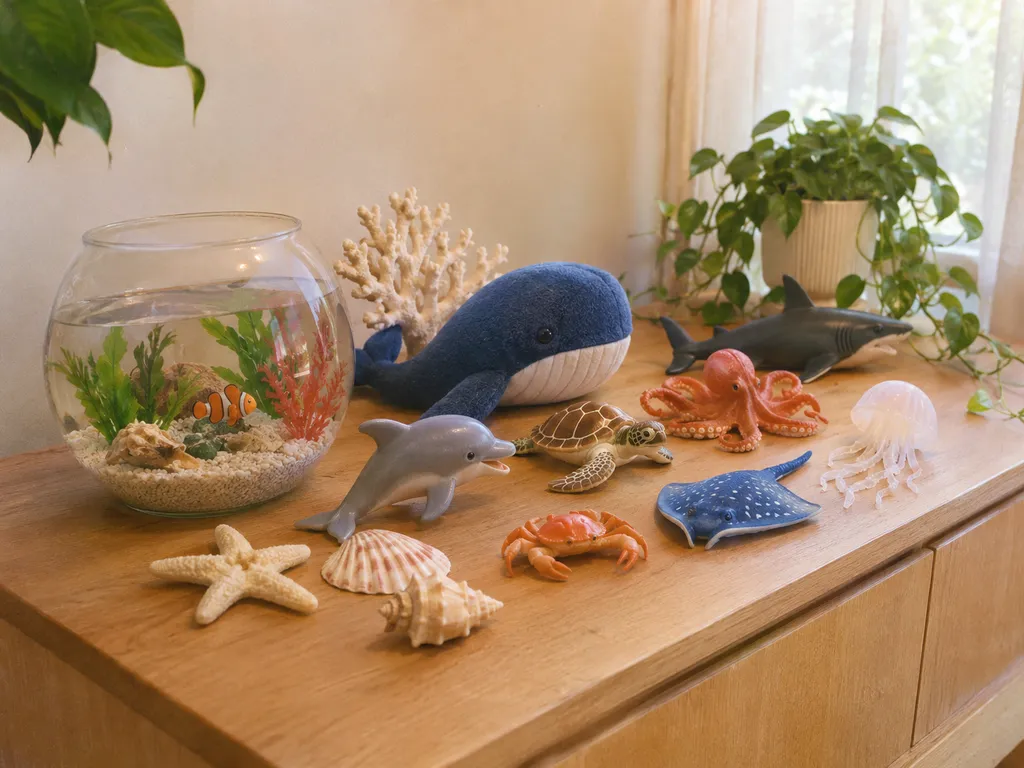
For school-age kids, keep A Speech About Sea Animals in English for Kids: Words and Activities to two or three sentences. Place animal pictures face up, say a word, and have your child touch its picture. Then reverse roles: the child points, names the animal, and copies one movement. Wide arms show a whale; moving fingers suggest tentacles.
For school-age kids, play “pick and describe.” Put picture cards in a bag. After choosing one, the child gives three facts with “It is…,” “It has…,” and “It can….” Next, sort animals by fins, shells, tentacles, or habitat. Ask the child to explain one choice in English.
For school-age kids, add planning and choice. The child can compare two animals, select the most unusual one, or organise a one-minute talk by movement, food, and body parts. Across LearnLink lessons, our tutors may adjust prompts and speaking time while keeping the task focused.
Practice That Builds Confident Speaking
Practising A Speech About Sea Animals in English for Kids: Words and Activities in short rounds works better than one long rehearsal. Name the pictures, complete sentence frames, then speak from keywords. During the final round, remove prompts one at a time. Stop after a successful attempt and revisit the speech later.
Three-clue Sea Animal Challenge
Choose an animal without naming it. Give three clues: “It has eight arms. It can hide. It lives in the sea.” The listener guesses “octopus.” Switch roles, then turn the clues into an introduction: “I want to tell you about the octopus.”
Record one round only if your child is comfortable hearing their voice. On the first replay, identify one success: an accurate animal name or complete sentence. On the second, choose one change: slower pace, sharper final sound, or louder opening. Do not correct every error in one round.
Common Mistakes and Simple Fixes
A Speech About Sea Animals in English for Kids: Words and Activities becomes hard to follow with too much new vocabulary. Choose a small set and reuse it across sentences. Replace long facts with details the child understands and can explain. A short, understood speech beats a long memorised text.
Watch grammar points that affect meaning. Use “an octopus,” not “a octopus”; “two fish,” not “two fishes” when speaking generally; and “it has fins,” not “it have fins.” Model the corrected sentence and request one calm repetition. Save extended grammar explanations until after speaking.
Children may call every sea animal a fish. Explain the distinction directly: sharks are fish, while whales and dolphins are mammals that breathe air. Focus pronunciation practice too. Break one difficult word into parts, place it in a sentence, then resume the speech.
- Practice five sea-animal words with children aged six to nine before speaking.
- Use one picture book to model clear sentences about dolphins, sharks, and turtles.
- Record a thirty-second speech, then replay it to correct pronunciation together.
- Replace single-word answers with complete sentences about each animal’s features and habitat.
- Praise two accurate facts, then gently fix one grammar mistake at a time.
When a word has several meanings or pronunciations, Cambridge Dictionary is a useful check before turning it into child-friendly examples.
Frequently Asked Questions
How Long Should a Sea Animal Speech Be?
For a young beginner, three to five sentences may be enough. A child school-age kids can prepare an opening, three animal descriptions, and a closing sentence. Older learners can develop a one- or two-minute talk with comparisons and reasons. Match the length to language level and comfort, not age alone. Understood words matter more than duration.
How Many Sea Animal Words Should My Child Learn at Once?
Start with four to six new words. Add another small group after your child can recognise, name, and use the first set in sentences. For A Speech About Sea Animals in English for Kids: Words and Activities, eight to twelve practised words provide ample choice. The final speech need not include every word.
What Can I Do If My Child Is Nervous About Speaking?
Reduce the audience and task. Let your child speak to one adult, a sibling, a toy, or a camera that is not recording. Keep picture prompts visible and permit a restart without comment. Rehearse the opening because a secure first sentence eases the next step. Praise a specific action, such as looking up or completing a sentence.
Should I Correct Mistakes During the Speech?
Avoid interruptions unless the message becomes impossible to understand. Save one or two corrections until the child finishes. Say the corrected sentence naturally, then request one repetition. In the next round, listen for that point and leave smaller errors alone. The child can then focus on communication instead of a grammar test.
If your child needs steady speaking practice, start small — choose a trial lesson.
Stay updated on our latest tips and resources by following us on Instagram LearnLink.